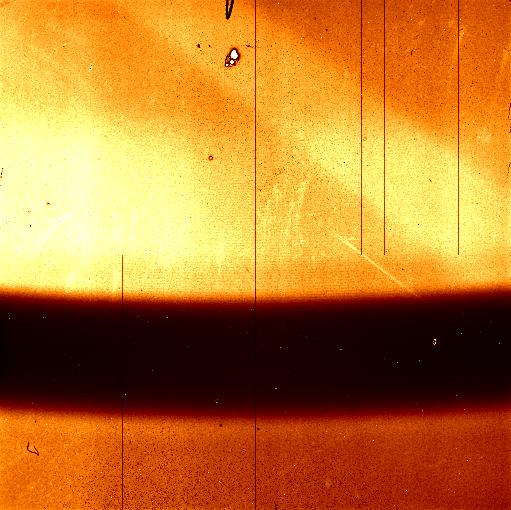
We used baffle-lamp flats for flatfielding and for the creation of a bad-pix map. In H and Ks bands we used the OH sky lines for wavelength calibration. The star was observed in an ABBA nodding pattern for J, H, K', Ks, and K with 20 second exposure time at each telescope position. For correction of telluric lines and fringes we used the F4V star HIP87860 (V=7.6, two offset exposures of 100s each). The spectra were optimally extracted.
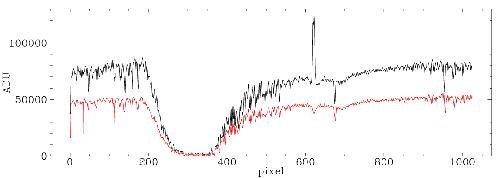
J band
spectrum of 66 Oph (top) and of HIP87860. Flat fielded, bad-pix
corrected, and optimally extracted.
Paschen beta 1282.2 nm
strongly in emmission in 66 Oph.
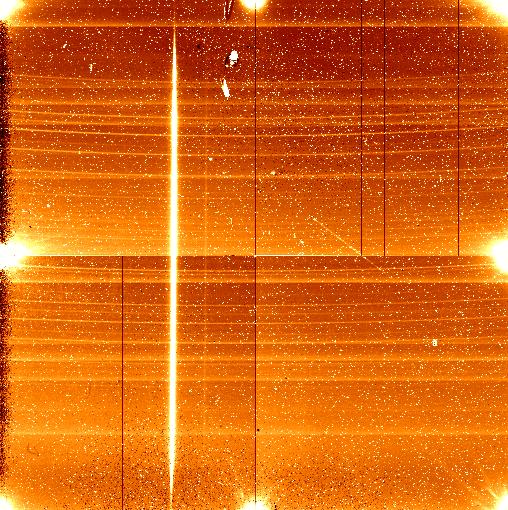
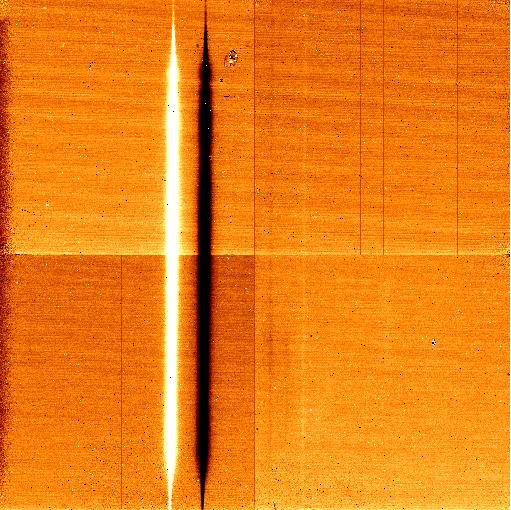
Result of ABBA nod of 15 arcsec in H band: A + A - B - B. Flatfield
and bad-pix corrections have not been applied to this image of 66
Oph.
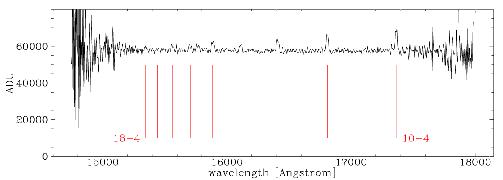
H
band spectrum of 66 Oph with Brackett Series 10-4 to 18-4
indicated. Flat fielded, bad-pix corrected, and optimally extracted.
Telluric lines and fringes have been corrected using the spectrum of
HIP87860. The wavelength solution was obtained from OH skylines of
the exposures of HIP87860.
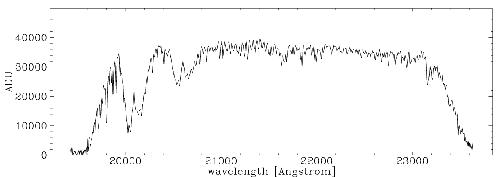
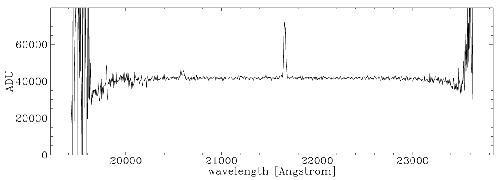
Ks
band spectrum of 66 Oph. Flat fielded, bad-pix corrected, and
optimally extracted. The wavelength solution was obtained from OH
skylines of the exposures of HIP87860. Telluric lines and fringes have
been corrected using the spectrum of HIP87860.
Brackett gamma
strongly in emmission, and double peaked emission at He I 2058.7 nm.
Last updated Aug 2003